
Review · SIPI FALLS & WATERFALL HIKES
4 Days mount Elgon Trek, 4321m a.s.l
Small trails can lead to big mountain days. This four-day Mount Elgon trek takes you through Uganda’s Bushiyi Trail toward Wagagai Peak, with high moorland, giant plants, crater scenery, and wide views. I like the small private-group format and the support of guides, rangers, porters, and a cook. I also like that the route includes local transport and camping, rather than reducing the mountain to a quick summit attempt. The main drawback is that the published Day 4 plan is not fully clear, so you should confirm the exact return route and overnight camp before paying.
Mount Elgon is not Uganda’s most famous mountain, but that is part of its appeal. You get a quieter high-altitude walk, a huge extinct volcanic caldera, and changing vegetation instead of a single hard push uphill. At $550 per person, the price can be fair for a private trek with meals and a mountain crew, but private transport and accommodation are not included.
In This Review
- Key points to know before you go
- Why Mount Elgon makes a fine four-day trek
- The road from Entebbe to eastern Uganda
- Day 1: Bushiyi Village to Shiloko Camp
- Day 2: Moving up to Dubi Camp at 3,300 meters
- Day 3: The 9-kilometer push to Wagagai Peak
- Day 4: Crater walking and the Hunter’s Cave question
- Camps, food, and the mountain crew
- Is $550 a good value?
- Who should choose this Mount Elgon trek?
- What to pack and what to confirm
- Should you book it?
- FAQ
- Where does the trek start?
- How high is Wagagai Peak?
- How long is the trek?
- Where do you sleep during the trek?
- Are meals included?
- Do I need to be very fit?
- Can I cancel for a refund?
Key points to know before you go
- Wagagai Peak reaches 4,321 meters: The summit is Uganda’s highest point on Mount Elgon and the main goal of the trek.
- The Bushiyi Trail begins near Bududa: A boda boda transfer carries you from the village area to the park registration point.
- Two important camps shape the climb: Shiloko is the first overnight stop, followed by Dubi Camp at about 3,300 meters.
- The scenery changes dramatically: Expect community farmland, montane forest, open moorland, giant lobelia, groundsel, crater views, and high volcanic terrain.
- A support crew is part of the experience: Guides, rangers, porters, and a cook help with route safety, camp setup, and meals.
- You need good physical fitness: The first day includes a steep climb, and the summit day covers about 9 kilometers from Dubi Camp before returning to camp.
Why Mount Elgon makes a fine four-day trek
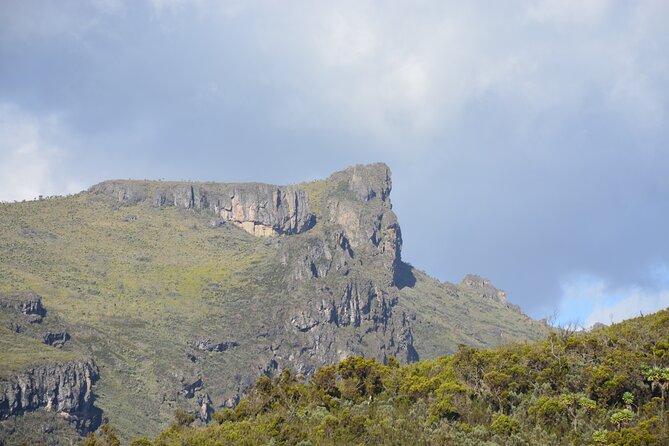
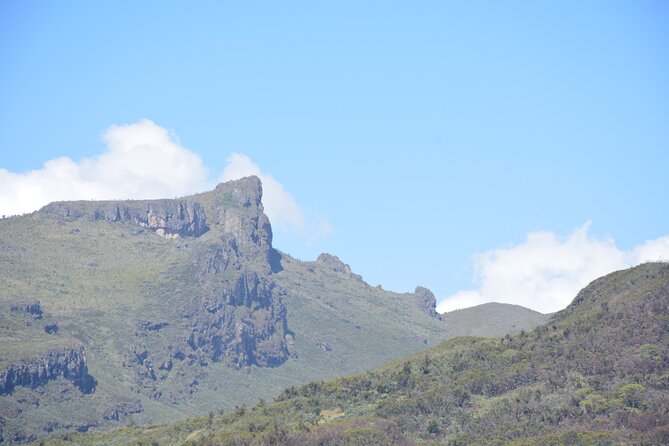
Mount Elgon is an extinct volcano that rises to 4,321 meters. In prehistoric times, it was taller than Kilimanjaro is today. Its caldera is enormous, stretching about 50 kilometers from east to west and 80 kilometers from north to south, with an area of roughly 4,000 square kilometers when the Kenyan side is included.
That scale changes the feel of the trip. This is not simply a pointed summit with a narrow trail to the top. Mount Elgon spreads across the Uganda-Kenya border, and the Ugandan side contains Wagagai Peak, the highest point. The mountain also feeds important watersheds, and its slopes pass through several plant zones.
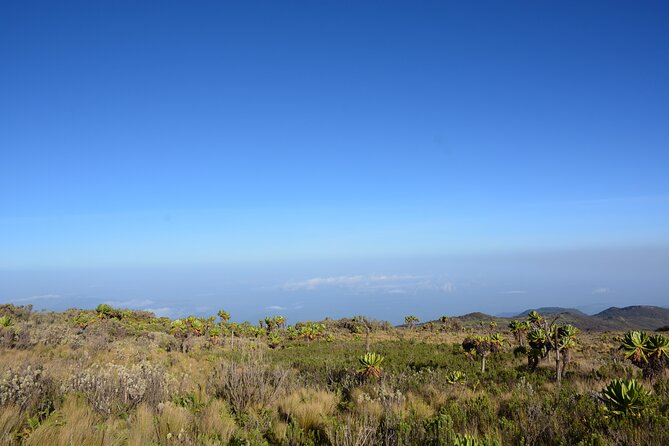
You may begin among settled communities and cultivated hills, then move into forest and cooler mountain country. Higher up, the trees give way to open moorland, with giant lobelia and giant groundsel creating the strange, almost prehistoric look that makes Mount Elgon memorable.
The mountain is also known for wildlife. Forest monkeys and small antelope may be found on the slopes, while elephant and buffalo are among the larger animals recorded in the area. Wildlife sightings are not guaranteed, and this is primarily a walking and scenery trip, not a traditional safari.
Other waterfall hikes in Uganda:
- 1 Day Sipi falls hike
★ 5.0 · 100 reviews - 7 Hours Guided Cycling Tour to Sezibwa Waterfalls
★ 5.0 · 37 reviews - 2 Sipi Falls hike and Coffee Tour Experience
★ 5.0 · 23 reviews
The road from Entebbe to eastern Uganda
The experience begins with pickup at Entebbe Airport at about 6:30 in the morning. From there, you travel east toward Mbale and then on toward Mount Elgon. Mbale is usually three to four hours from Kampala by a good tarmac road, although the total time from the airport depends on traffic, stops, and the final approach to the trail.
This early transfer is practical, but it makes Day 1 a long day. You are not stepping straight from an airport vehicle onto an easy path. You will spend part of the morning on the road, then reach the Bushiyi area, organize registration, meet the mountain crew, and begin climbing.
The route passes through eastern Uganda, where the change from city travel to mountain country happens gradually. That is useful for getting your mind ready, but you should not plan an important evening commitment after the trek. The activity ends back at the meeting point, yet the precise return timing is not stated.
One point needs special attention before booking. Local transportation is included, but private transportation is listed as not included, even though airport pickup is offered. Ask exactly what vehicle transfers are covered, what you must arrange yourself, and how your return to Entebbe or Kampala will work.
Day 1: Bushiyi Village to Shiloko Camp
After breakfast at Riverline Hotel, you take boda bodas through the local community toward the trail start. The ride covers about 8 to 9 kilometers to the patrol office in Bududa Village and the Bushiyi Gate area.
At the gate, you register and receive a briefing. This is where you meet the ranger guides, porters, and cook who will support the group. The arrangement gives the trek a proper mountain-expedition feel, even though the route is described as undemanding in technical terms.
The walking distance on Day 1 is about 6 kilometers, but the climb is steep. That combination matters. Six kilometers may sound modest, yet a steep trail after a morning transfer can feel demanding, especially if you are carrying a daypack and have not adjusted to the altitude.
Shiloko Camp is the first overnight stop. Lunch and overnight accommodation are included in the camping arrangement, and the first night is intended to help you acclimatize. Use the evening to eat well, drink water, check your clothing, and ask the guide about the next day’s pace.
The first camp is also your first real test of the trip. If you arrive exhausted, tell the guide early. The point of a four-day schedule is to gain height gradually, not to prove something during the opening afternoon.
Day 2: Moving up to Dubi Camp at 3,300 meters
Day 2 begins early after breakfast. The route continues upward to Dubi Camp, which sits at about 3,300 meters above sea level.
This is the day when altitude begins to matter more than distance. The information provided does not give a precise Day 2 distance, so your walking time will depend on the chosen route, pace, trail conditions, and rest stops. You should expect a steady mountain day rather than a sightseeing stroll.
Dubi Camp is important because it positions you for the summit. The overnight stay allows your body time to adjust before the push to Wagagai Peak. At 3,300 meters, cold nights, tired legs, and slower movement are all possible, even if you are normally fit.
Pay attention to how you feel. Headache, nausea, unusual weakness, or dizziness should be reported to the guide. A good mountain crew can adjust the pace or decide whether continuing is sensible. Reaching the summit is never more important than returning safely.
Camping is part of the attraction. The crew sets up the rest camp, and previous participants especially praised the porters for making camp comfortable. Campfires under the stars were also a memorable part of the experience, though weather and park rules determine what is possible on a given night.
Meals included in the package are breakfast, lunch, and dinner. The food has been described as fresh and pleasant, which is welcome after a long climb. Still, bring personal snacks you know you will eat, since appetite at altitude can be unpredictable.
More trekking days out of Uganda:
- 3 Days gorilla trekking Safari tour in Uganda
★ 5.0 · 121 reviews - 8-Day Murchison Falls, Chimp and Epic Gorilla Trekking Safari
★ 5.0 · 72 reviews - 5-Day Pearl of Africa Chimps and Gorilla Trekking Safari
★ 5.0 · 52 reviews - 3-Day Tour to Uganda – Gorilla Trekking Bwindi Forest
★ 5.0 · 51 reviews
Day 3: The 9-kilometer push to Wagagai Peak
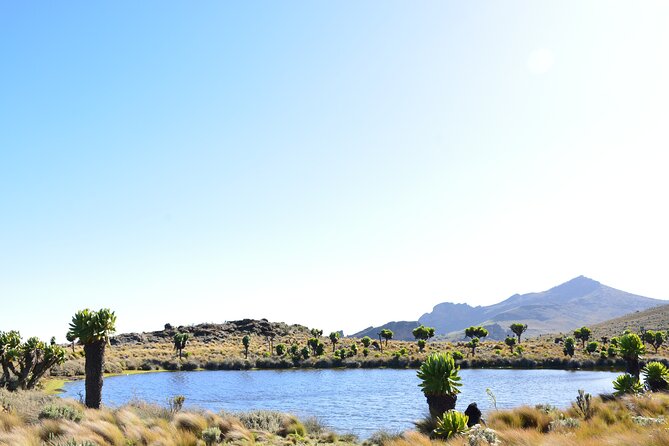
The summit day begins early with breakfast at Dubi Camp. From there, you hike about 9 kilometers to Wagagai Peak and then return to either Dubi Camp or Shiloko Camp, depending on how you feel after reaching the summit.
The route includes flatter sections and gentle, steep climbs. That variety is good news for your legs. You are not facing one continuous wall, but the altitude makes every uphill section more serious than it would be at low elevation.
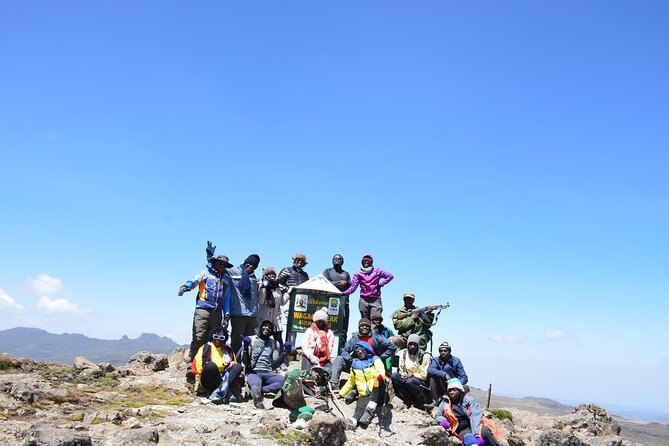
Wagagai Peak reaches 4,321 meters. The summit is not simply a number for a passport checklist. It gives you a high point from which to understand Mount Elgon’s vast volcanic form, open ridges, and changing vegetation. The views are one of the strongest reasons to choose this mountain.
Do not treat the 9 kilometers as the whole day. The return walk, summit stops, changing weather, and group pace can make Day 3 long. The flexible overnight decision is sensible. If you feel strong, you may continue farther down. If the climb has taken more from you, staying at Dubi Camp may be the better choice.
A guide named William received repeated praise for communication, organization, motivation, and photography. One account also noted that he studied photography and took strong pictures. That can be a real benefit on a high mountain, where a little help with timing, framing, and safe viewpoints can make your summit photos better.
Day 4: Crater walking and the Hunter’s Cave question
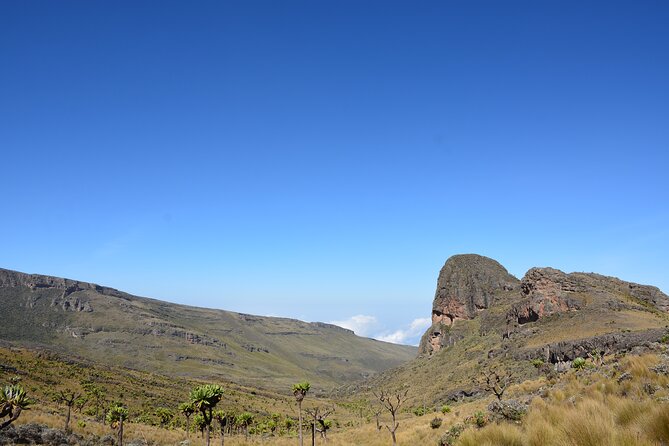
The Day 4 description includes a walk across the crater and camping at Hunter’s Cave Camp, at about 3,600 meters. Breakfast, lunch, and dinner are listed for this day.
This section sounds like a major scenic feature, not merely a descent. Walking across the crater gives you a chance to see the mountain’s volcanic scale from inside the high country. Hunter’s Cave Camp also provides another high overnight setting.
But the schedule needs clarification. Day 3 says you return to Dubi or Shiloko for the third night, while Day 4 says you camp at Hunter’s Cave Camp. The listed meeting point says the activity ends back at the starting point, but no exact descent or transfer time is given.
Before booking, ask these direct questions:
- Is Hunter’s Cave Camp the final overnight stop or an additional camp?
- Does the four-day program finish at Hunter’s Cave, Shiloko, Bushiyi, or another point?
- Is transport back to Entebbe, Kampala, or Mbale included?
- Does the crater walk happen after the summit or as part of a modified route?
- What happens if the group returns to Dubi or Shiloko after summiting?
This is not a reason to reject the trek. It is simply the most important planning gap in the supplied program. A clear day-by-day route will help you pack correctly and arrange your next hotel or transfer.
Camps, food, and the mountain crew
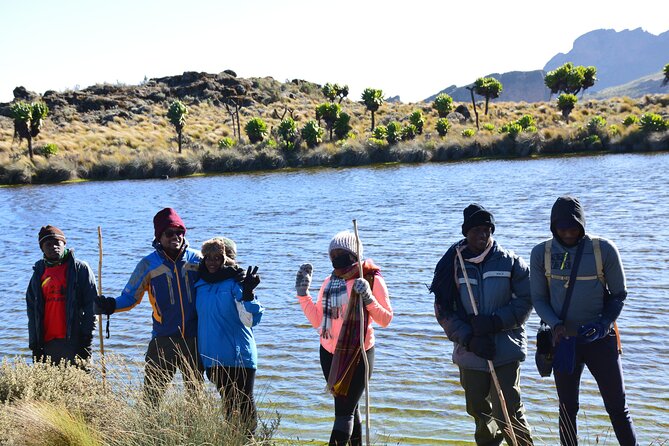
The support system is one of the strongest parts of this trek. You are accompanied by guides, rangers, porters, and a cook. Rangers matter for route safety and park procedures, while porters carry shared equipment and help establish camp.
The porters have been praised for creating comfortable rest camps, and the cooking has received good marks for fresh food. That matters because camp quality shapes how well you recover. A warm meal and an organized sleeping area can make the difference between enjoying the next day and merely surviving it.
Accommodation is not included as a separate hotel service. The program uses camping on the mountain, with Shiloko, Dubi, and possibly Hunter’s Cave named as overnight locations. You should confirm what camping gear is supplied and what you must bring. The supplied details do not specify tents, sleeping bags, mattresses, or porter weight limits.
The trip is private, so only your group participates. That gives you more control over the pace and makes it easier to discuss fatigue, photography stops, and the summit decision. It can also mean less social variety than a larger group trek, but most people who choose a private mountain outing value that flexibility.
Is $550 a good value?
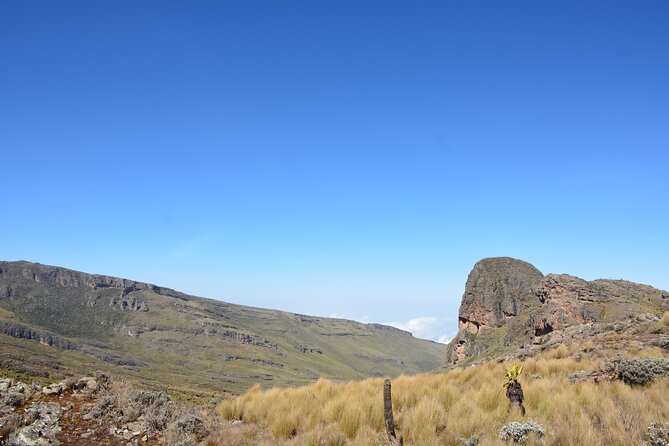
The listed price is $550 per person. For a four-day private trek with meals, local transportation, a guide, park support, porters, and a cook, that can be reasonable. The value is strongest if the fee covers the main mountain expenses from pickup through the trail program.
The price is less straightforward because private transportation and accommodation are listed as exclusions. You may need to pay separately for airport or road transfers, hotels before or after the hike, and personal equipment.
I would ask for a written cost breakdown before making a nonrefundable plan. Confirm park fees, porter support, camping equipment, airport pickup, return transport, and any hotel night at Riverline Hotel. The experience is advertised as averaging five days in advance for booking, so last-minute planning may not be ideal.
Free cancellation is available if you cancel at least 24 hours before the start time. Changes made inside that window are not accepted, and poor weather may lead to a different date or a full refund. Since mountain conditions can affect the plan, this policy is useful, but confirm the local start time used for the cutoff.
Who should choose this Mount Elgon trek?
This trek suits you if you want a serious mountain walk without technical climbing. You should have strong physical fitness, be comfortable with steep climbs, and accept that high altitude slows the body down.
It is a good choice for friends, couples, students, and small private groups. A group of student friends reached the peak successfully despite having no previous experience of this kind, but that should not be read as a guarantee. Fitness, preparation, health, and weather still matter.
You may prefer this trip if you value scenery over luxury. The appeal is the changing plant life, crater country, open high ground, campfires, and a supportive local crew. It is less suitable if you need a fixed hotel bed each night, a precise transport schedule, or a short summit walk with little physical effort.
The route also suits repeat East Africa visitors looking for something beyond the most famous peaks. Mount Elgon offers a broad volcanic setting, a quieter feel, and a chance to spend several days moving through Uganda’s eastern mountain country.
What to pack and what to confirm
Pack for wet, cold, and warm conditions. The supplied details do not give a full gear list, so ask the operator what is provided before you travel.
At minimum, plan around:
- Strong hiking shoes or boots
- Warm layers for camps above 3,000 meters
- Waterproof clothing
- A daypack
- Water bottles and personal snacks
- Sun protection
- A headlamp
- Personal medication and basic toiletries
- A sleeping bag and mat, unless supplied
You should also confirm how much luggage the porters can carry, where your main luggage stays during the trek, and what happens to valuables. Keep important items in a waterproof bag because mountain weather can change quickly.
The tour has a perfect recommendation rate from 11 submitted ratings, with repeated praise for organization, staff support, food, scenery, and motivation. That is encouraging, but the route description still deserves careful checking, especially the Day 4 camp and return plan.
Should you book it?
Book this Mount Elgon trek if you want a private, scenery-heavy mountain experience with strong support and a real summit goal. The combination of Wagagai Peak, crater walking, giant high-altitude plants, camping, and a local crew gives you much more than a one-day climb.
I would book it after confirming the transport and Day 4 details in writing. If the operator clearly explains the camps, equipment, included transfers, and final return point, $550 can offer solid value. If you prefer easy logistics and hotel comfort, choose a different Uganda trip. If you are ready for steep walking, cold camps, and a little route uncertainty in exchange for a memorable mountain, Mount Elgon is a worthy choice.
FAQ
Where does the trek start?
Pickup is offered from Entebbe Airport in Uganda. After traveling east toward Mbale and Mount Elgon, the walking route begins near Bushiyi Village and Bushiyi Gate in the Bududa area.
How high is Wagagai Peak?
Wagagai Peak is 4,321 meters above sea level. It is the highest point of Mount Elgon on the Ugandan side of the mountain.
How long is the trek?
The experience lasts approximately four days. The summit section from Dubi Camp to Wagagai Peak is about 9 kilometers, and the first day includes about 6 kilometers of steep hiking.
Where do you sleep during the trek?
The itinerary names Shiloko Camp, Dubi Camp, and Hunter’s Cave Camp as mountain overnight locations. The program uses camping, but you should confirm which camps are used on each night.
Are meals included?
Breakfast, lunch, and dinner are included. Meals are listed for the mountain days, and a cook joins the support crew.
Do I need to be very fit?
Yes. The tour states that participants should have a strong physical fitness level. The route includes steep climbs and reaches 4,321 meters, where walking can feel harder than expected.
Can I cancel for a refund?
You can cancel at least 24 hours before the start time for a full refund. Cancellations or changes made less than 24 hours before the experience are not accepted for a refund, and poor weather may lead to a new date or a full refund.
Latest into the Uganda lineup
- Uganda: 3-Day Gorilla Experience from Entebbe★ 5.0 · 2 reviews
- Uganda Equator Tour From Kampala To Kayabwe★ 5.0 · 4 reviews
- Uganda: 1-Day Murchison Falls Park Safari with Boat cruise★ 5.0 · 3 reviews
- Uganda: 2-Day Murchison Falls Park Safari with Boat cruise★ 5.0 · 7 reviews
- Hot Springs Exploration and Hike Craters★ 5.0 · 6 reviews
- 4 Days Uganda Gorilla and Wildlife Tour★ 5.0 · 2 reviews
- Coffee Tour Experience★ 5.0 · 5 reviews
- 4 Hour Art and Craft Interactive Workshop★ 5.0 · 2 reviews
Sipi Falls & Waterfall Hikes, compared.
7 Hours Guided Cycling Tour to Sezibwa Waterfalls
Read our review →
Browse the lists this tour appears in