
Review · WALKING TOURS
Best Kampala group Walking Tour.
Kampala is best understood at street level. This five-hour walk takes you from Buganda Road through markets, monuments, taxi parks, shopping lanes, and Kisenyi, ending at Gaddafi National Mosque. I like the local focus, and I like that guides such as Med, Yusuf, and Francis have adjusted walks around personal interests. The main drawback is simple: you cover a lot of ground, and the city streets can be crowded, noisy, and tiring.
At $25 per person, this is a strong-value introduction to Kampala if you want more than a drive past the sights. You get bottled water and an English-speaking guide, but the mosque entrance fee is extra. The tour is offered in the morning or afternoon, and groups can reach 20 people, so ask about group size if personal attention matters to you.
In This Review
- Key points to know before you book
- Starting on Buganda Road near the Craft Market
- Monuments that explain Uganda’s public story
- Entering downtown Kampala’s organized chaos
- Fabric, Kikubo, and the city’s working heart
- Kisenyi: a sensitive look at urban inequality
- The Hindu temple and Kampala’s mixed identities
- Gaddafi National Mosque and the minaret climb
- What $25 buys you, and what it does not
- Morning or afternoon: choosing the better start
- Who should book this Kampala walk?
- Final verdict: a worthwhile first taste of Kampala
- FAQ
- How long does the Kampala walking tour last?
- How much does the tour cost?
- Where does the tour begin?
- Where does the tour finish?
- Is the Gaddafi National Mosque entrance fee included?
- Is bottled water provided?
- Is an English-speaking guide included?
- Can I choose a morning or afternoon departure?
- How many people can join the tour?
Key points to know before you book
- Five hours on foot: This is a serious city walk, not a short landmark stroll. Wear practical shoes and expect Kampala’s hills, traffic, crowds, and uneven urban routes.
- Markets are the main event: Nakasero Market, the fruit market, fabric sellers, Kikubo shopping zone, and the large local market bring daily Kampala into view.
- A guide makes the difference: Med, Yusuf, and Francis are praised for clear explanations, patience, and adapting the route to individual interests.
- History appears in small doses: The Independence Monument, Second World War Monument, Hindu temple, and Buganda references help place Kampala in context.
- The mosque finishes the day: Gaddafi National Mosque offers a major architectural stop and panoramic views from its minaret, with admission paid separately.
- Expect contrasts: The route passes polished commercial areas and poorer neighborhoods, including part of Kisenyi. Go with respect and an open mind.
Starting on Buganda Road near the Craft Market
The meeting point is Senana Shopping Centre on Buganda Road, opposite the Craft Market. This is a useful place to begin because you start near local crafts rather than at a distant attraction, and the guide can explain the route before the walking begins.
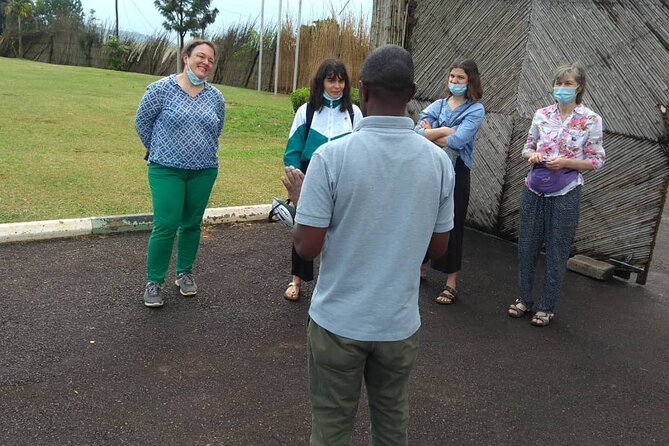
The first minutes matter. Kampala is a large, busy capital, and a short briefing helps you understand the order of the stops. Your guide also becomes your practical anchor, helping you move through streets where traffic, pedestrians, shops, and informal selling all share the same space.
The Craft Market is a natural opening for the city’s handmade side. You might find a chance to look at locally made goods, though shopping is not the central purpose of the experience. If you want to buy something, keep purchases modest and do not let browsing turn the five-hour route into a rushed finish.
The tour includes bottled water, which is a small but welcome touch. Kampala’s streets can make a long walk feel longer, especially in warm weather, so bring your own water as well if you drink often.
More walks around Kampala:
- Kampala’s Best Experience walking tour
★ 5.0 · 137 reviews - Kampala Walking City Tours (Women Guided)
★ 5.0 · 115 reviews - Kampala Walking Tour (3 Hours) with Optional Gaddafi Mosque Visit
★ 5.0 · 112 reviews
Monuments that explain Uganda’s public story
From the starting point, the route moves toward the Second World War Monument and the Independence Monument. These stops give the walk a historical frame before you enter the more intense commercial center.
The Independence Monument is especially useful for first-time visitors. You learn more about leadership in Uganda and see the sculpture of the country’s first president. The point is not to spend hours at one monument. Instead, the guide connects the sculpture and public symbols to Uganda’s political story, giving you details that are easy to miss from a passing vehicle.
The Second World War Monument adds another layer. Its presence points to Uganda’s place in a wider twentieth-century story, while the surrounding streets show how older civic landmarks now sit within a fast-moving capital.
I like this part because the history is tied to places you can actually see. It is easier to remember a country’s past when the explanation comes beside a monument, street, or public building rather than in a detached lecture.
Do not expect a museum-style presentation. This is a walking tour, and the quality of the explanation depends heavily on your guide. The best approach is to ask questions. Yusuf is praised for taking time with questions, while Med is praised for bringing history and local places to life. Those are useful qualities on a city walk with many short stops.
Entering downtown Kampala’s organized chaos
The route then heads downtown, where Kampala becomes louder, denser, and more demanding. The tour description calls this organized chaos, which is a fair warning. You may be walking beside traffic, moving through packed shopping areas, and stopping often as the guide points out details.
This section is valuable because it shows Kampala as a working city. You are not simply looking at grand buildings. You are seeing where people shop, commute, sell food, choose fabric, and manage daily business.
The oldest market on the route is described as a famous fruit market. This is one of the best places to slow down and use your senses. Look at the produce, notice how goods are arranged, and listen to the quick exchanges between sellers and customers. The guide can help explain what you are seeing without turning the market into a staged performance.
Nakasero Market is another important stop. Francis has been praised for leading visitors through the market and helping them find fruits and local foods. That makes this a good place to try a small purchase if you want one. Ask your guide what is in season and how locals use unfamiliar items.
The market visit also comes with a practical limit. Crowds can make movement slow, and personal belongings need attention. Keep your phone and wallet secure, follow the guide’s instructions, and avoid blocking narrow paths while taking photographs.
Fabric, Kikubo, and the city’s working heart
The fabric market and Kikubo shopping zone show a different side of Kampala’s trade. These areas are less about sightseeing and more about commerce. Shops and stalls serve local buyers, and the pace may feel more direct than in a craft market designed for visitors.
I find this kind of stop more useful than a polished shopping street because it shows how the city actually functions. You can see the range of goods, the pressure of limited space, and the speed at which people make buying decisions.
Kikubo is described as a major shopping zone, so you should expect a crowded urban setting rather than a quiet walk. The guide’s role is important here. A good guide helps you understand what each area sells and keeps the group moving without losing the small details that make the route worthwhile.
The tour may also include a large local market. This broadens the picture beyond fruit and fabric. It is a chance to see the everyday economy of Kampala, with the guide providing context about local routines and the people working there.
Do not plan to carry large shopping bags for the rest of the walk. The route continues through more streets and neighborhoods before the final mosque visit, and five hours on foot becomes less pleasant when you are hauling purchases.
Same country, a completely different few days:
- 3 Hours Guided Cycling Tour Across Lake Victoria
★ 5.0 · 151 reviews - 3 Days gorilla trekking Safari tour in Uganda
★ 5.0 · 121 reviews - Lake Victoria Island Cycling Tour from Kampala
★ 5.0 · 120 reviews - Steve Kampala Walking tours (Airpals Safaris tour)
★ 5.0 · 89 reviews
Kisenyi: a sensitive look at urban inequality
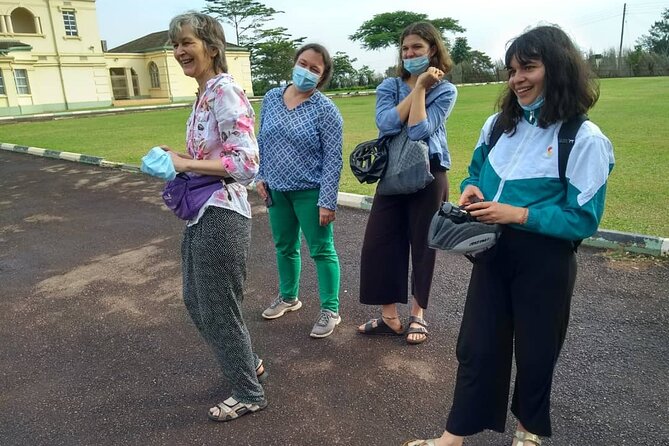
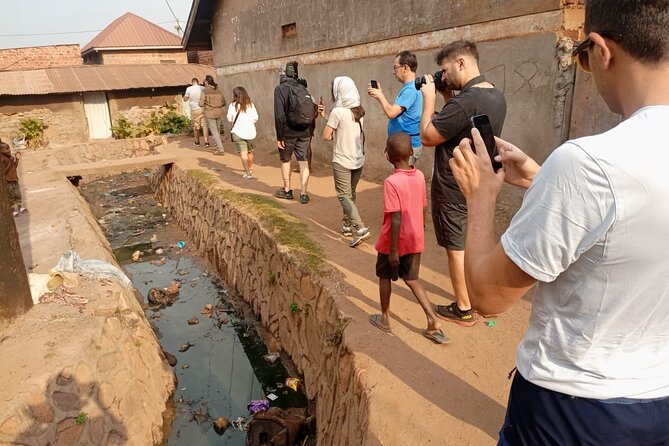
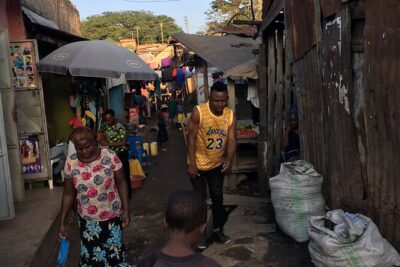
One of the more serious sections takes you through part of Kisenyi, described as a slum area. This is not a photo opportunity. It is a chance to see a poorer neighborhood and hear about daily life and the challenges faced by residents.
This part can be eye-opening, but it requires good judgment. Keep your camera away unless your guide makes it clear that photography is welcome. Do not treat people’s homes, work, or hardship as scenery. Walk quietly, listen, and ask questions in a respectful way.
The value here lies in contrast. Earlier, you may have passed commercial streets and busy markets. Kisenyi shows another side of the same city, where daily life is shaped by tighter conditions and fewer resources. A local guide can add meaning that you would not get by wandering through alone.
Some of the strongest praise for the tour centers on this direct look at Kampala’s neighborhoods. The experience is described as eye-opening and sensory, with attention to the hospitality of local people and the realities they face. I would still treat this section as a learning experience, not entertainment.
The route may change according to conditions and your guide’s judgment. Reviews describe guides adjusting walks to personal requests, including visits to local shops and less familiar parts of Kampala. That flexibility is useful, but it also means your exact sequence may not be identical every time.
The Hindu temple and Kampala’s mixed identities
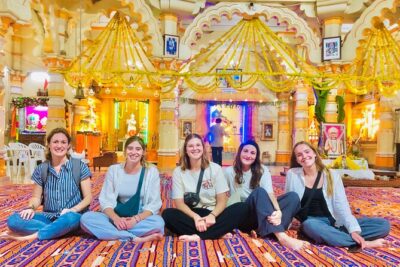
The Hindu temple provides a reminder that Kampala’s religious and cultural life is not represented by one tradition. Along with the National Mosque, it helps show the city’s mixture of communities and places of worship.
You should listen closely here because the stop may be brief. The tour’s strength is the combination of sites: a Hindu temple, Christian and Islamic references in the wider city, public monuments, markets, and royal Buganda connections. Together, these stops give you a broader picture than a route built only around famous buildings.
The guide’s explanation is what turns a passing view into something useful. Ask about the temple’s place in the city and how the different communities fit into Kampala’s public life. The available information does not promise a formal interior visit, so treat it primarily as an exterior and neighborhood point of interest unless your guide says otherwise.
Gaddafi National Mosque and the minaret climb
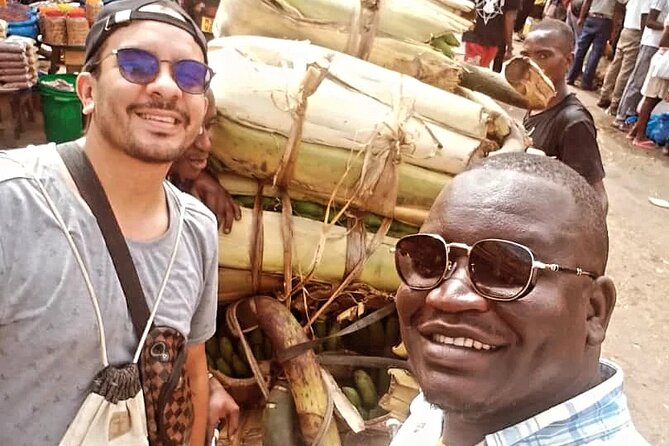
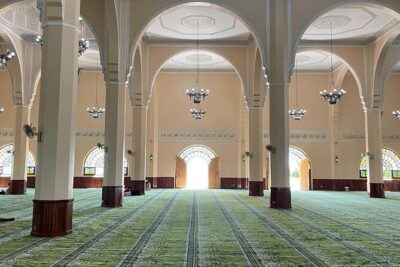
The final major stop is Gaddafi National Mosque, also called the National Mosque. The tour ends here, and the mosque is included as an exterior and interior highlight, but the entrance fee is not included in the $25 price.
The mosque’s architecture is one reason the finish works well. It brings the route to a grand landmark after hours spent in markets, streets, and working neighborhoods. The tour information describes a visit to the biggest mosque in sub-Saharan Africa and a climb up the minaret.
The minaret is the payoff. From above, you get panoramic views across Kampala, a helpful way to understand the city after walking through its separate districts. You have seen the streets at eye level. Now you can look down and connect the busy center, markets, and surrounding neighborhoods into one city.
The climb also affects comfort and timing. If you dislike stairs or are already tired, ask your guide about the exact plan before you begin. The tour information does not state the number of steps or provide a separate accessibility arrangement, so you should not assume the minaret is suitable for everyone.
Dress and behave respectfully at a mosque. Follow any instructions given at the entrance, and remember that this is an active place of worship as well as a sight. The admission fee is paid separately, so carry some money for that purpose.
What $25 buys you, and what it does not
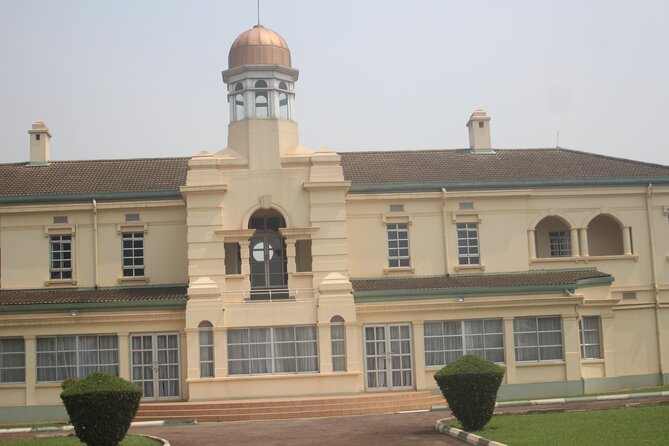
At $25 per person, the tour offers good value for a five-hour introduction to Kampala. You receive a full-time English-speaking guide, bottled water, a route through major markets and monuments, and a finish with city views from the mosque’s minaret.
The strongest value is the guide’s local access and interpretation. You could walk past the Independence Monument, markets, taxi parks, and fabric shops alone, but you would miss much of the connection between them. The tour gives you a structure and a person to answer questions.
The price does not cover Gaddafi National Mosque’s entrance fee. That extra charge is worth remembering when comparing the total cost. The tour also does not include food or shopping, so your own purchases and snacks are separate.
Groups can reach 20 people. That is not enormous, but it is large enough for the walk to feel less personal, especially in narrow markets. Guides such as Med, Yusuf, and Francis are praised for being flexible and attentive, but the group size may affect how many questions you can ask.
Morning or afternoon: choosing the better start
You can choose a morning or afternoon departure. The best option depends on your schedule, energy, and preference for market activity.
A morning start gives you the walk earlier in the day, when you may have more energy for five hours on foot. It also leaves time afterward for another Kampala activity. An afternoon start can fit better around a morning arrival or other plans, but you may finish later and have less flexibility afterward.
The tour requires good weather. If poor weather causes cancellation, you are offered another date or a full refund. You can cancel for a full refund up to 24 hours before the start time, but cancellations or changes inside 24 hours are not refunded or accepted.
The experience is near public transportation, and most people can participate. Service animals are allowed. Still, this is an urban walking route with markets, crowded streets, and a minaret climb, so judge your own stamina carefully.
Who should book this Kampala walk?
I would choose this tour if you want a first look at Kampala that feels connected to ordinary city life. It suits solo visitors, friends, and families who enjoy walking, asking questions, and moving through markets instead of staying in a vehicle.
It is particularly useful early in a Kampala visit. The route helps you understand the city’s layout and gives you ideas for places to return to, such as Nakasero Market or the downtown shopping areas.
You may prefer another format if you want a quiet historical tour, a fully accessible route, or long indoor visits at each site. This experience is active and broad. It offers many impressions rather than a deep stop at one museum or monument.
Final verdict: a worthwhile first taste of Kampala
Book this tour if you want Kampala explained by someone who knows its streets and can adjust the experience to your interests. The markets, taxi parks, monuments, Kisenyi, and Gaddafi Mosque create a full picture of the capital, and the minaret view gives the day a memorable finish.
Go prepared for noise, crowds, heat, uneven walking, and a sensitive neighborhood visit. Bring comfortable shoes, keep your belongings close, carry extra water and money for the mosque fee, and ask questions throughout. At $25, it is a practical and fairly priced way to get your bearings while seeing the city as a place where people live and work, not just a list of attractions.
FAQ
How long does the Kampala walking tour last?
The tour lasts approximately five hours.
How much does the tour cost?
The price is $25 per person.
Where does the tour begin?
The meeting point is Senana Shopping Centre on Buganda Road in Kampala, opposite the Craft Market.
Where does the tour finish?
The tour finishes at Gaddafi National Mosque on 5K Gadafi Road in Kampala.
Is the Gaddafi National Mosque entrance fee included?
No. The entrance fee for Gaddafi National Mosque is paid separately.
Is bottled water provided?
Yes. Bottled water is included.
Is an English-speaking guide included?
Yes. A full-time English-speaking tour guide is included.
Can I choose a morning or afternoon departure?
Yes. The tour offers morning and afternoon departure options.
How many people can join the tour?
The maximum group size is 20 people.
Latest into the Kampala lineup
- Uganda Equator Tour From Kampala To Kayabwe★ 5.0 · 4 reviews
- Uganda: 3-Day Gorilla Experience from Entebbe★ 5.0 · 2 reviews
- Uganda: 1-Day Murchison Falls Park Safari with Boat cruise★ 5.0 · 3 reviews
- 3-Day Mind Refreshing in Murchison Falls National Park★ 5.0 · 4 reviews
- Entebbe kampala airport transfers★ 5.0 · 3 reviews
- Weekend Package B★ 5.0 · 7 reviews
- 15 Day Gorillas, Chimps and Big 5 Safari Tour★ 5.0 · 5 reviews
- Uganda 4 days Gorilla Trekking★ 5.0 · 3 reviews
Walking Tours, compared.
Kampala Walking Tour (3 Hours) with Optional Gaddafi Mosque Visit
Read our review →
Steve Kampala Walking tours (Airpals Safaris tour)
Read our review →
Browse the lists this tour appears in