Review · TOURS
Entebbe Eco Tour – Full Day
Entebbe is much more than an airport stop. This full-day outing links rescued wildlife, Lake Victoria wetlands, old gardens, reptiles, and Uganda’s Catholic heritage in one well-planned circuit. I especially like the chance to search for the rare shoebill by boat and the inclusion of an Ugandan lunch, which makes the day feel more connected to local life.
I also like that the tour is private, runs with an English-speaking driver-guide, and includes admission fees, transport, fuel, and the Mabamba boat transfer. Guide Hillary has received especially warm praise for his wildlife and cultural knowledge, along with thoughtful touches such as bringing a raincoat and safari blanket. The main consideration is the pace: five stops over roughly nine to ten hours can feel full, and you should confirm the exact shoebill transfer details before departure because the wording about that cost has caused confusion.
In This Review
- Key points to know before booking
- Why this Entebbe day trip works well
- Uganda Wildlife Conservation Education Centre: two hours with rescued animals
- Mabamba Swamp: the search for a shoebill
- Entebbe Botanical Gardens and the Lake Victoria views
- Ugandan lunch and the value of a private guide
- Uganda Reptile Village: a community conservation stop
- Kigungu and the arrival of Catholicism in Uganda
- The full-day pace, comfort, and fitness level
- Who should book this Entebbe eco tour?
- Should you book it?
- FAQ
- How long does the Entebbe Eco Tour last?
- What is the price of the tour?
- Is hotel pickup available?
- Is the Mabamba Swamp boat transfer included?
- Is lunch included?
- Which animals might I see at the wildlife center?
- What birds might I see at Mabamba Swamp?
- Is the tour physically demanding?
Key points to know before booking
- Mabamba Swamp is the day’s rare-bird prize: The two-hour boat visit offers your best chance to see the prehistoric-looking shoebill and many other wetland species.
- The private format gives you room to adjust: You can focus more on the shoebill, the wildlife center, or the gardens if your group agrees with the guide.
- Uganda Wildlife Conservation Education Centre is a rescue and education stop: You may see giraffes, rhinos, chimpanzees, lions, zebras, cheetahs, monkeys, and native birds.
- The tour covers five very different places: Wildlife, wetlands, plant life, reptiles, and Catholic history all appear in one day.
- Lunch is part of the package: A Ugandan meal with a soft drink or mineral water is included, though extra drinks and meals are not.
- Expect moderate physical activity: Walking through the gardens, moving around the wildlife center, and taking the swamp boat require a reasonable level of fitness.
Why this Entebbe day trip works well
The strength of this tour is its range. You do not spend the whole day looking at animals in one enclosed setting. Instead, the route shows several ways Uganda protects nature: through wildlife rescue, wetland conservation, community education, and older botanical collections.
You also get a useful introduction to Entebbe’s setting on Lake Victoria. The day combines a major conservation center with a small community-run reptile facility and a wetland reached by boat. That variety matters if you have only a short stay in Uganda and want more than a quick look around town.
The tour starts at 8:30 a.m. and lasts around nine to ten hours. With five stops, you should expect a steady day rather than a leisurely wander. The listed stop times add up to nine hours, before allowing for driving, lunch, boarding the boat, and small delays.
At $270 per person, this is not a budget sightseeing ride. It is a private experience, however, and the price includes a 4WD minibus, fuel, guide, lunch, entry fees, and the Mabamba boat transfer. For a couple, family, or small group that values a private vehicle and one person coordinating the day, the package can make sense. Solo visitors should think harder about the cost.
Other Kampala trips that pair well with this one:
- 3 Hours Guided Cycling Tour Across Lake Victoria
★ 5.0 · 151 reviews - Kampala’s Best Experience walking tour
★ 5.0 · 137 reviews - 3 Days gorilla trekking Safari tour in Uganda
★ 5.0 · 121 reviews
Uganda Wildlife Conservation Education Centre: two hours with rescued animals
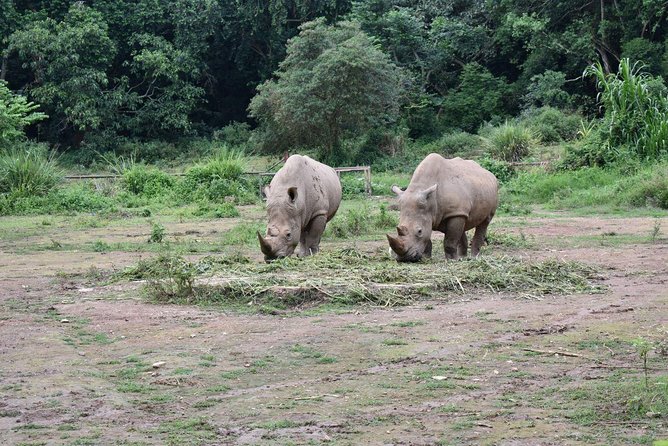
Your first major stop is the Uganda Wildlife Conservation Education Centre, established in 1952 to rescue and rehabilitate injured and orphaned wildlife. The center holds more than 400 indigenous animals, 500 plant species, and over 250 bird species.
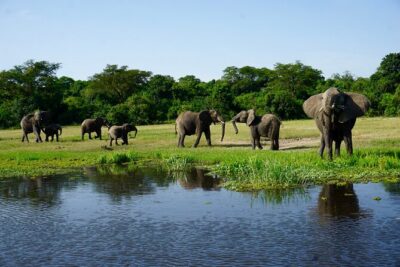
The animal list is impressive for one morning stop. You might see zebras, antelopes, monkeys, giraffes, cheetahs, rhinos, chimpanzees, warthogs, lions, birds, and reptiles. The shoebill is also among the species associated with the center, although Mabamba Swamp is the dedicated birding stop later in the day.
I like the educational purpose here. This is not presented simply as a place to tick off familiar safari animals. Its work centers on rescue and rehabilitation, so your guide can help explain why conservation and public education matter in Uganda.
Allow about two hours. That gives you enough time to walk through the grounds and take in several types of wildlife without turning the stop into a rushed photo session. Still, the exact animals you see are not guaranteed, and the experience is different from a drive through a national park. You are visiting a conservation and education center, not heading into open wilderness.
If wildlife is your main reason for booking, tell the guide early. One successful private outing adjusted its focus toward the shoebill, the wildlife center, and the botanical gardens. The private format makes that sort of adjustment more realistic than it would be on a fixed group bus.
Mabamba Swamp: the search for a shoebill
For many people, Mabamba Swamp is the reason to book the day. The wetland lies beside Lake Victoria, northwest of the Entebbe Peninsula, and is known for its protected birdlife and the rare shoebill stork.
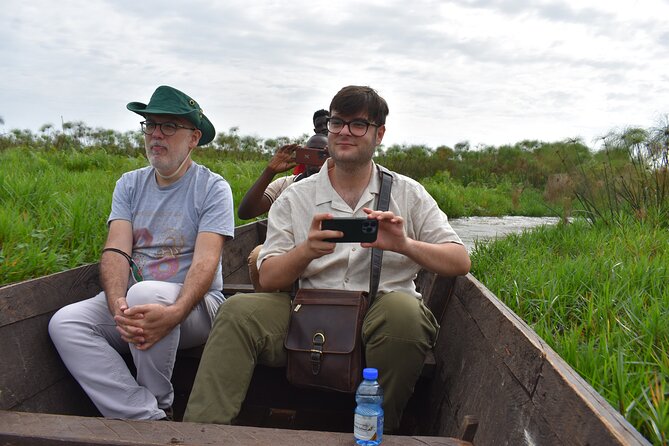
You reach the site by boat, with boat transfers and entrance fees listed as included. The visit takes about two hours. That may sound short, but wetland birding depends on conditions, timing, and luck. The shoebill may appear quickly, or you may spend more time scanning the channels and papyrus.
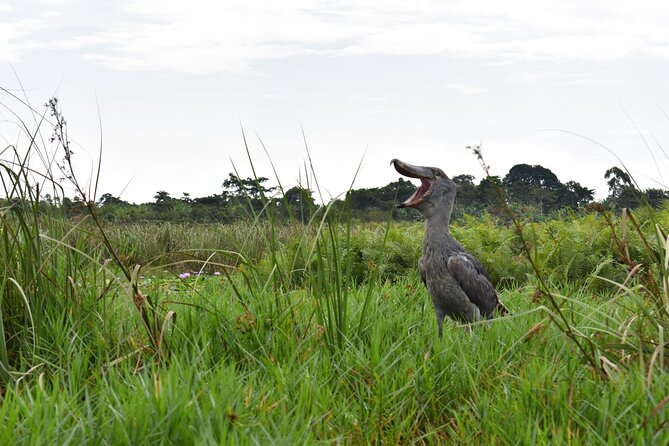
The shoebill has a huge bill, a tall body, and an almost prehistoric appearance. Seeing one in its wetland setting is far more memorable than looking at a picture in a guidebook. One account describes finding the bird up close, while another praises the boat ride through the swamp areas and the chance to see wildlife at close range.
The bird list extends well beyond the shoebill. You might look for pallid harriers, black kites, papyrus canaries, papyrus gonoleks, blue swallows, white-winged warblers, Goliath herons, malachite kingfishers, gull-billed terns, winding cisticolas, Vieillot’s black weavers, and grosbeak weavers.
A guide makes a real difference here. The names of small wetland birds are not much use if you cannot locate them, and the boat crew may know where birds have recently been seen. Keep your expectations sensible, though. A rare bird is never a sure thing.
There has been some confusion about whether the boat transfer is included. The current package information says it is included along with entrance fees, but one past booking raised the opposite issue. I would confirm this point in writing before paying, especially if the boat transfer is the main reason you are booking.
Entebbe Botanical Gardens and the Lake Victoria views
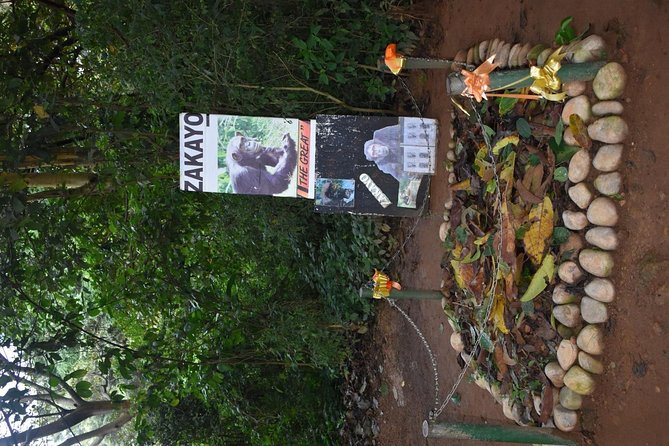
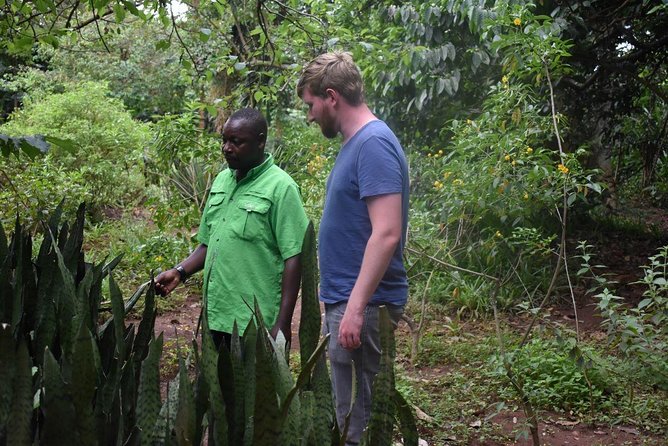
The Entebbe Botanical Gardens date from 1898 and protect many long-established tree species. After the wildlife and wetland stops, the gardens offer a slower change of pace, with fresh air, birds, plant life, and a walk toward a cliff with views of the Entebbe Peninsula.
The two-hour allocation is generous enough for a proper walk rather than a quick stop beside the entrance. You can use this time to stretch your legs and let the guide point out plant species and birds. The gardens also give the day some visual variety after the more animal-focused morning.
The cliff viewpoint is a useful detail. You are not only walking among trees. You also get a wider look toward the peninsula and Lake Victoria. The exact view will depend on weather and visibility, so do not treat it as a guaranteed panorama.
This is a good stop for anyone who enjoys plants, birds, or quiet walking. If you prefer nonstop wildlife sightings, two hours here may feel long. In a private tour, though, you can discuss the amount of time you want to spend at the gardens.
Same country, a completely different few days:
- Lake Victoria Island Cycling Tour from Kampala
★ 5.0 · 120 reviews - Kampala Walking City Tours (Women Guided)
★ 5.0 · 115 reviews - Kampala Walking Tour (3 Hours) with Optional Gaddafi Mosque Visit
★ 5.0 · 112 reviews - Steve Kampala Walking tours (Airpals Safaris tour)
★ 5.0 · 89 reviews
Ugandan lunch and the value of a private guide
Lunch is included at a local restaurant, with a Ugandan meal and either a soft drink or mineral water. The meal is one of the practical benefits of booking a full package, since you do not have to arrange food between stops.
It also gives you a chance to try local cooking rather than relying only on familiar hotel meals. The exact restaurant and dishes are not specified, so you should not expect a fixed menu. One account described lunch as excellent, while another noted that a public holiday and the busy festive period limited local restaurant choices. Timing and calendar dates can matter.
The English-speaking driver-guide accompanies you throughout the day. Hillary has been praised for explaining Ugandan customs, history, and wildlife, as well as for being attentive to changing weather. A raincoat and safari blanket may sound like small things, but they show why a private guide can be useful when conditions shift.
You should budget extra money for personal expenses, additional meals, extra drinks, tips, and gratuities. Those items are not included. The vehicle is a private 4WD minibus with fuel provided, and only your group participates, so you are not sharing the day with a large coach party.
Uganda Reptile Village: a community conservation stop
The Uganda Reptile Village was created in 2003 as a community-based organization that teaches local people about the value of ecotourism. It protects more than 20 reptile species, with over 50 reptiles in total.
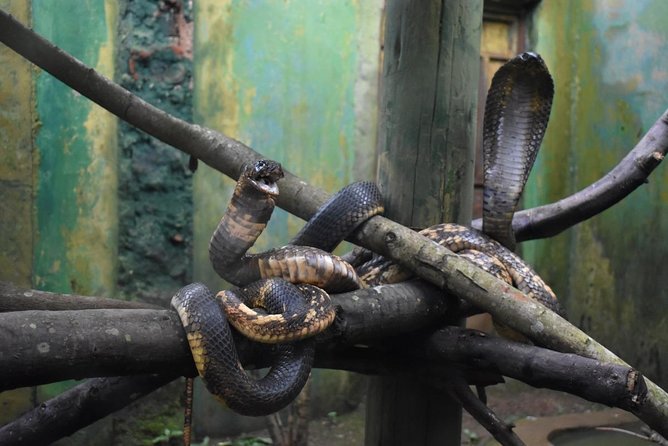
This is the stop most likely to divide opinion. If snakes make you uneasy, the collection of mambas, pythons, vipers, cobras, and puff adders may be a lot to take in. If you are interested in reptiles, it can be one of the most memorable parts of the day.
The collection also includes tortoises, monitor lizards, crocodiles, chameleons, and other reptiles. The value is not only in seeing the animals. The center’s community focus gives your guide a way to explain why conservation education matters outside the larger wildlife institutions.
Plan on roughly two hours. That allows time to see the animals and learn about the species without rushing. Families and wildlife fans may enjoy the contrast with the mammals at the education center. Anyone who dislikes close encounters with snakes should tell the guide and keep expectations realistic.
Kigungu and the arrival of Catholicism in Uganda
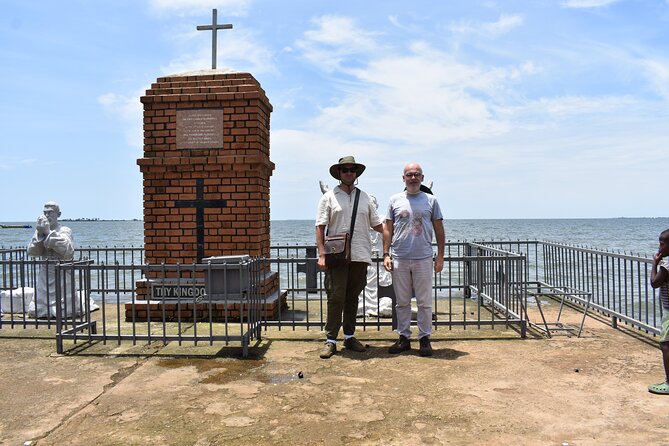
The final stop is Kigungu, identified as the arrival point of Catholicism in Uganda in the 18th century. It is a shorter visit, with about one hour set aside.
After a day focused on animals and wetlands, Kigungu adds a cultural and religious layer. You are not simply moving from one attraction to another. You are also seeing how Entebbe’s story includes faith, local customs, and outside influence.
The stop is free to enter. The available details do not specify exactly how much walking or which monuments you will see, so your guide will be important in giving the site context. If religious history interests you, ask for a fuller explanation. If wildlife is your priority, this is the easiest stop to keep brief.
The full-day pace, comfort, and fitness level
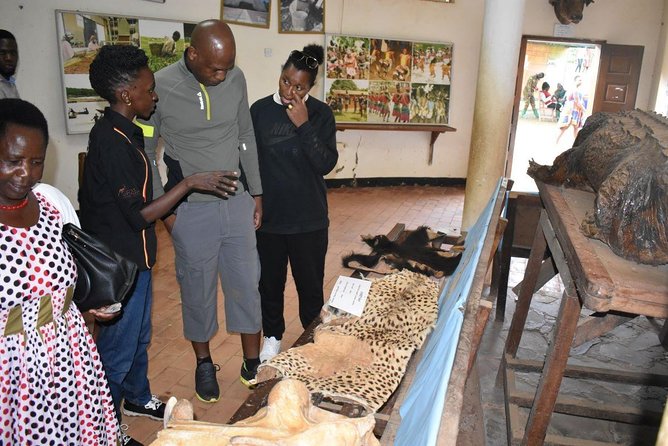
The route is designed as a full day, not a quick Entebbe orientation. You will spend time in a vehicle, walk at several sites, board a boat, and move between very different environments. A moderate level of physical fitness is advised.
Pickup is offered, and the meeting time is 8:30 a.m. The tour is near public transportation, but the package is built around private pickup and private transport. Confirmation is provided when you book.
Wear practical clothes and bring protection from changing weather. The guide may provide a raincoat and safari blanket, as happened for one person, but you should not assume those items are guaranteed for every departure. Comfortable walking shoes make sense for the gardens and wildlife center.
The timetable can also shift. A public holiday affected restaurant and activity choices on one occasion, so avoid planning a flight or another fixed appointment immediately after the tour. The listed duration is approximately nine to ten hours, not a precise return time.
Free cancellation is available if you cancel at least 24 hours before the start time. Changes or cancellations made later are not accepted for a refund. That policy is worth noting if your Uganda schedule is still moving.
Who should book this Entebbe eco tour?
I would recommend it most strongly to people with limited time who want a broad introduction to Entebbe. It suits couples, families, and small private groups who prefer a guide and vehicle rather than arranging five separate visits.
Bird lovers should give the tour serious attention because Mabamba Swamp offers a chance to see the shoebill and more than 260 bird species. Wildlife fans also get a useful mix of mammals, birds, reptiles, and conservation education in one day.
The tour is less suitable if you want a slow, specialized birding expedition. Two hours at Mabamba may not be enough for a serious bird photographer who wants to wait patiently for specific species. It may also disappoint someone expecting a national park safari, since the wildlife center is a rescue and education facility.
The price is easiest to justify when divided among a private group. Solo visitors may find it expensive, while a group that would otherwise pay separately for transport, admissions, lunch, and a boat can get reasonable value from the all-in structure.
Should you book it?
Book this tour if you want Entebbe’s main nature and culture stops handled in one private day, especially if the shoebill is high on your list. The strongest parts are the Mabamba boat ride, the range of wildlife at the conservation center, the guide support, and the included Ugandan lunch.
Before booking, confirm the boat transfer cost, ask how much flexibility you have at each stop, and check whether your group is comfortable with a long day. If you want a focused birding trip or a relaxed garden walk, choose a narrower experience. If you want a practical first look at Entebbe with wildlife, wetlands, reptiles, and local history all in one route, this is a solid choice.
FAQ
How long does the Entebbe Eco Tour last?
The tour lasts approximately nine to ten hours. It begins at 8:30 a.m.
What is the price of the tour?
The listed price is $270 per person. The tour is private, so only your group participates.
Is hotel pickup available?
Pickup is offered. The meeting information lists an 8:30 a.m. start time.
Is the Mabamba Swamp boat transfer included?
The package information states that Mabamba boat transfers and entrance fees are included. Because one past booking raised confusion about this point, confirm the exact arrangement before departure.
Is lunch included?
Yes. The package includes a Ugandan lunch with a soft drink or mineral water. Extra meals, drinks, and beverages are not included.
Which animals might I see at the wildlife center?
Possible sightings include zebras, antelopes, monkeys, giraffes, cheetahs, rhinos, chimpanzees, warthogs, lions, birds, and reptiles. Animal sightings cannot be guaranteed.
What birds might I see at Mabamba Swamp?
The wetland is known for the shoebill stork and has more than 260 bird species. Other listed species include Goliath herons, malachite kingfishers, black kites, papyrus gonoleks, blue swallows, and gull-billed terns.
Is the tour physically demanding?
A moderate level of physical fitness is recommended. The day includes walking at several sites, a boat transfer, and a full schedule lasting roughly nine to ten hours.
Latest into the Kampala lineup
- Uganda: 3-Day Gorilla Experience from Entebbe★ 5.0 · 2 reviews
- Uganda Equator Tour From Kampala To Kayabwe★ 5.0 · 4 reviews
- Uganda: 1-Day Murchison Falls Park Safari with Boat cruise★ 5.0 · 3 reviews
- 3-Day Mind Refreshing in Murchison Falls National Park★ 5.0 · 4 reviews
- Entebbe kampala airport transfers★ 5.0 · 3 reviews
- Weekend Package B★ 5.0 · 7 reviews
- 15 Day Gorillas, Chimps and Big 5 Safari Tour★ 5.0 · 5 reviews
- Uganda 4 days Gorilla Trekking★ 5.0 · 3 reviews
Tours, compared.
3 Hours Guided Cycling Tour Across Lake Victoria
Read our review →
3 Days gorilla trekking Safari tour in Uganda
Read our review →
Kampala Walking Tour (3 Hours) with Optional Gaddafi Mosque Visit
Read our review →
Steve Kampala Walking tours (Airpals Safaris tour)
Read our review →