
Review · WALKING TOURS
Kampala:Guided walking tour
Kampala makes sense on foot. This 3.5-hour tour combines a short scooter ride, guided walks, local food, and stories about Buganda and Uganda, giving you more than a quick look at the capital. I like the mix of major sights and ordinary city life, and I like that guide Nickson is praised for making Uganda’s past easy to follow. The main caution is physical: the mosque visit includes 270 stairs to the top of a minaret, with no lift.
I also like the practical local help. You can taste local snacks, learn how to shop without paying inflated souvenir prices, and ask questions as you go. At $32 per person, with hotel transfers, water, helmets, and a guide included, it offers solid value for a half-day introduction to Kampala. Just remember that food, drinks, and entry fees cost extra.
In This Review
- Key points at a glance
- Why this Kampala tour works well for a first visit
- Starting at Kabaka’s Palace
- The 10-minute scooter ride
- Walking Kampala at street level
- A local restaurant and Uganda’s flavors
- The city market and local shopping advice
- Kampala views and the 270-step climb
- Finishing at the Independence Monument
- What the $32 price really covers
- The guide makes the difference
- Who should book this experience
- Should you book the Kampala guided walking tour?
- FAQ
- Where does the tour begin?
- Where does the tour end?
- How long does the tour last?
- What language does the guide speak?
- Is hotel transportation included?
- Are food, drinks, and entry fees included?
- How many stairs are there at the mosque?
Key points at a glance
- Kabaka’s Palace starts the story: Begin with the Buganda kingdom and Uganda’s past at one of Kampala’s key historic sites.
- A scooter saves time: The short 10-minute ride breaks up the walking and helps you cover more ground.
- Local food is part of the experience: Stop at a local restaurant and try foods, snacks, or drinks made and enjoyed in Uganda.
- The mosque climb is demanding: Reaching the minaret viewpoint means climbing 270 stairs without an elevator.
- Nickson earns strong praise: His friendly manner and clear explanations about Uganda’s past are a major strength.
- The route ends at the Independence Monument: The finish gives the half-day tour a useful link to Uganda’s modern national story.
Why this Kampala tour works well for a first visit
Kampala can feel hard to read at first. The city spreads across hills, roads fill quickly, and the distance between a historic site, a market, and a good viewpoint is not always obvious. A local guide helps you spend your limited time well and shows you places you might not reach comfortably on your own.
This tour is not just a drive past buildings. You move between a palace, streets, a restaurant, a mosque, city viewpoints, and the Independence Monument. That variety matters. You get an introduction to royal Buganda, Uganda’s period before and after independence, daily shopping, local food, and the city’s present-day pace.
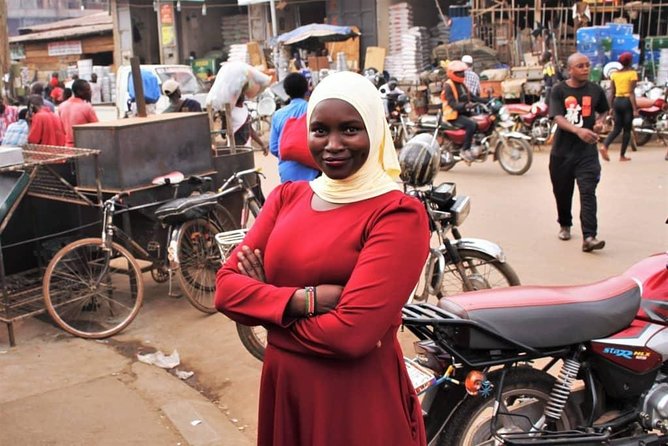
The guide is central to the experience. Nickson is repeatedly praised for his friendly approach, strong knowledge of Kampala, and ability to explain the country’s story in an engaging way. He also accepted a short-notice booking, which is useful if your Kampala schedule changes at the last minute.
You should allow three and a half hours, though the route includes several stops where the pace may change. Some people will want to linger over photographs, food, or shopping. The tour is flexible enough to make room for that, but you should not expect a tightly timed museum-style visit.
More walks around Kampala:
- Kampala’s Best Experience walking tour
★ 5.0 · 137 reviews - Kampala Walking City Tours (Women Guided)
★ 5.0 · 115 reviews - Kampala Walking Tour (3 Hours) with Optional Gaddafi Mosque Visit
★ 5.0 · 112 reviews
Starting at Kabaka’s Palace
The meeting point is in the gardens outside the palace gate, where seats are available under trees. That is a sensible place to begin, especially if you arrive early and need a quiet spot before the city portion of the tour starts.
Kabaka’s Palace anchors the first part of the day in the Buganda kingdom. The tour reaches back about 140 years into the history of Buganda and Uganda, then connects that past with the country you see today. This context makes the later city sights easier to understand. Kampala is not simply a modern capital with old buildings scattered around it. Its identity is tied to Buganda, royal traditions, colonial-era changes, independence, and the many communities that now call the city home.
Do not expect the palace stop to be only a photo opportunity. The value comes from having someone explain what you are looking at and why it matters. If you know little about Uganda before arriving, this opening gives the rest of the tour a clear thread.
Entry fees are not included, so ask your guide what costs apply before you enter any site. Carry cash, as the tour specifically advises it.
The 10-minute scooter ride
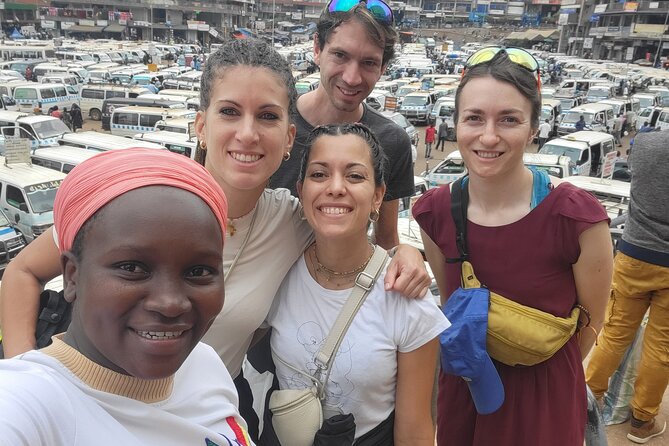
A short scooter transfer follows the palace visit. Helmets are included, which is an important practical detail. The ride lasts about 10 minutes, so it is not a long motorbike excursion. Its real purpose is to move you between parts of Kampala without spending the entire morning walking or waiting in traffic.
I see this as a useful touch for a city tour. You get a brief taste of local transport while keeping your energy for the walking sections. It also gives you a closer view of the city than sitting in a sealed vehicle would.
Still, a scooter will not suit everyone. If you feel uncomfortable on two wheels, ask about the exact arrangement before booking. The activity is not suitable for people with mobility impairments, and the tour takes place during the daytime. Wear practical clothing and shoes rather than treating this as a dressy sightseeing outing.
Walking Kampala at street level
After the scooter ride, you continue on foot for about 10 minutes. This is where the tour begins to feel less like a list of monuments and more like an introduction to Kampala’s daily routines.
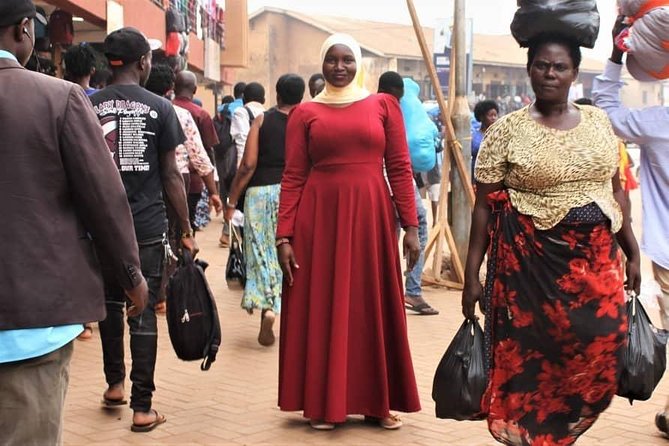
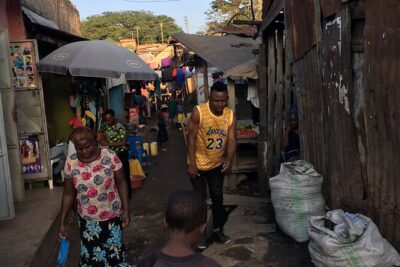
The city is home to more than seven million people, and the tour focuses on how that population moves, shops, eats, and works. You may see a much less polished side of the capital than you would from a standard sightseeing vehicle. That is part of the appeal. You can ask questions as you go, stop for photos, and get help understanding what is happening around you.
The guide also helps you go to places you might not find easily by yourself. That matters in Kampala, where a map alone will not explain which market entrance to use, where to pause, or how to approach a purchase. Nickson is particularly praised for helping with souvenir shopping and explaining how to avoid being overcharged.
Keep your expectations sensible. This is a working city, not a staged cultural show. Streets may be crowded, noisy, or uneven. You are visiting real neighborhoods and commercial areas, so stay alert and follow the guide’s directions.
Same country, a completely different few days:
- 3 Hours Guided Cycling Tour Across Lake Victoria
★ 5.0 · 151 reviews - 3 Days gorilla trekking Safari tour in Uganda
★ 5.0 · 121 reviews - Lake Victoria Island Cycling Tour from Kampala
★ 5.0 · 120 reviews - Steve Kampala Walking tours (Airpals Safaris tour)
★ 5.0 · 89 reviews
A local restaurant and Uganda’s flavors

The restaurant stop lasts about 45 minutes and combines a break, photos, a visit, and guided explanation. Food and drinks are not included, so bring cash if you want to eat or sample something.
This stop gives you a chance to taste the food locals enjoy through the year rather than relying only on hotel dining. The experience may include local snacks and drinks, and the tour description specifically highlights banana juice, locally made beer, and vodka. These are unusual details for a standard city walk and give you a better sense of Uganda’s everyday food culture.
I would treat this as a chance to ask questions, not simply as a fixed meal. Find out what you are ordering, how it is made, and which dishes are common in Kampala. If you have dietary restrictions, tell the guide before ordering, since the supplied information does not list specific menu choices.
The 45-minute stop is long enough to rest after walking and talk through what you have seen. It also gives you room to watch local life rather than rushing through a snack between monuments. Since the bill is extra, you control how much you spend.
The city market and local shopping advice
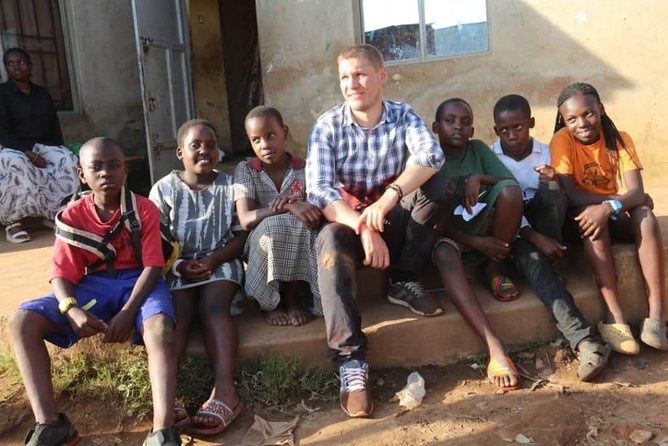
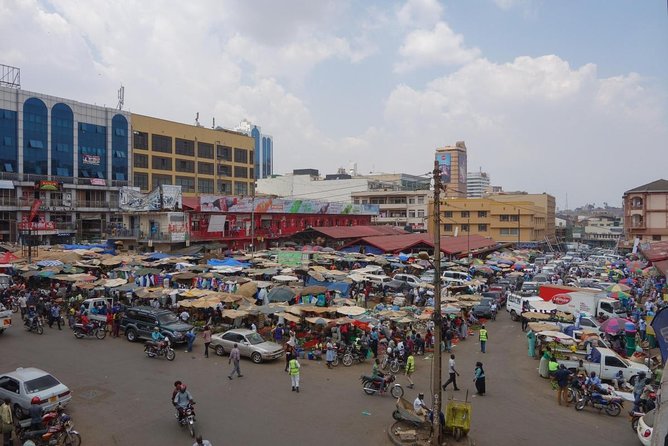
One of the most useful parts of the experience is the focus on Kampala’s biggest and busiest local market. The tour presents it as a place where fresh food and vegetables come directly from gardens to city buyers.
A market visit shows you a side of Kampala that a palace or monument cannot. You see how people buy everyday food, how produce is displayed, and how the capital depends on trade from outside the city. You also get a better feel for the scale of Kampala’s population and the speed of daily business.
This is a good place to keep your guide close. The market can be crowded, and you may find the sights, smells, and movement intense. The benefit of having a local guide is not just translation. You can learn how to behave, where to pause, and how to bargain in a way that feels fair.
The guide’s shopping advice is especially practical. One visitor was helped while buying souvenirs and was shown how to shop like a local instead of accepting the first inflated price. That kind of small lesson can save money and reduce stress for the rest of your Uganda trip.
Kampala views and the 270-step climb
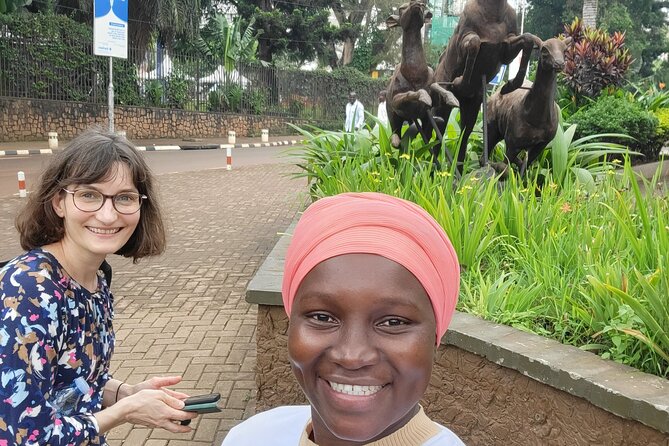
The city sightseeing section lasts about 45 minutes and includes photography, a visit, guided commentary, hiking, and an aerial view. The exact balance depends on the day and on how much time you spend at earlier stops, but this is the physically hardest portion.
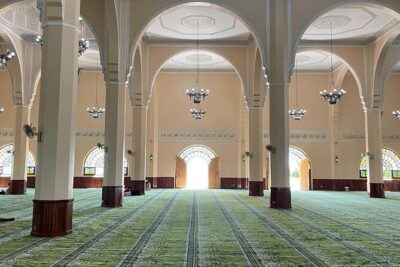
At the mosque, you climb 270 stairs to reach the top of the minaret. There is no elevator. The reward is a high view over Kampala, but you need to judge your own fitness honestly. Take your time, wear shoes with a firm grip, and carry water. Drinking water is included, but you may want more for a hot day.
This climb is not suitable for babies under one year or people with mobility impairments. It may also be a poor fit if you dislike steep staircases or have limited stamina, even if you do not consider yourself mobility impaired. Ask the guide how the climb fits into the day if you are unsure.
The view gives you a useful final look at Kampala after seeing it from street level. You have watched people shop, moved through the city, and heard about its past. From above, you can better understand the city’s spread across multiple hills and the sheer scale of its urban life.
Finishing at the Independence Monument
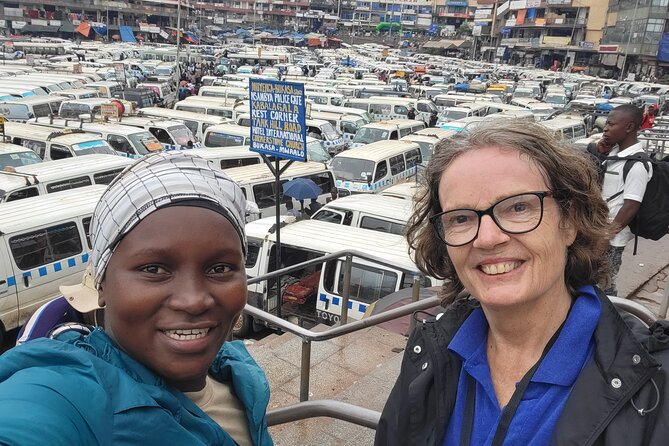
The tour ends at the Independence Monument. This is a fitting endpoint because the day begins with Buganda’s royal past and closes with Uganda’s national identity after independence.
The monument also gives the guide a natural place to connect earlier stories. You can ask about Uganda before and after independence, a subject Nickson explains particularly well. If you have only one free half-day in Kampala, ending here leaves you with a basic timeline rather than a collection of unrelated stops.
The itinerary lists a photo stop, sightseeing, and guided explanation in this later part of the route. It does not promise a long formal visit inside every location, so think of the tour as a moving city lesson. You are gathering context, images, tastes, and impressions across several parts of Kampala.
What the $32 price really covers
At $32 per person, the tour is priced reasonably for a private-feeling, guide-led half-day, assuming the included hotel pickup and drop-off apply to your location. You also get drinking water, helmets, and an English-speaking guide.
The strongest value comes from local access. A guide can explain the palace, help you handle the market, point out details you would miss, and connect the city’s history with present-day life. That is more useful than simply paying for transport between sights.
Budget extra for entry fees, food, drinks, and gratuity. The advertised price is not an all-inclusive day cost. Carry cash, as specifically advised, and ask about any entrance charges before the visit begins.
You also get flexible booking conditions. You can cancel up to 24 hours in advance for a full refund, and you can reserve now while paying later. Those terms help if your Uganda plans are still moving around.
The guide makes the difference
Nickson receives the strongest praise connected with this experience. His friendly style, clear explanations, and enthusiasm for Kampala turn the route into more than transport and photographs.
His strength appears to be storytelling with practical help. He explains Uganda’s past before and after independence, answers questions about Kampala, introduces local food, and helps with shopping. That range is valuable because the tour crosses several subjects in a short time.
The tour provider is Abantubo Safaris, and the language listed is English. If you want detailed explanations, tell the guide what interests you most at the start. You might prefer royal history, food, markets, photography, or modern Kampala, and the route has enough flexibility to give extra attention to one area.
Who should book this experience
I would recommend this tour to a first-time visitor with one free half-day in Kampala. It is also a good fit for a business visitor who wants to use a spare day well, rather than seeing only the inside of a hotel or conference venue.
You should book if you want:
- A guide-led introduction to Buganda and Uganda
- Local food and drinks, with purchases made separately
- A market visit and help with souvenir shopping
- Walking mixed with a short scooter ride
- City views and a demanding stair climb
- Hotel pickup and drop-off included
You may want another option if you need a fully accessible route, dislike scooters, cannot manage 270 stairs, or want every entrance and meal included in the price. The tour is also less suited to babies under one year.
Should you book the Kampala guided walking tour?
Book it if you want Kampala explained by someone who knows how the city works, not just a quick circuit of landmarks. The combination of Kabaka’s Palace, local streets, food, market life, the mosque viewpoint, and the Independence Monument gives you a useful first picture of Uganda’s capital.
The best reason to choose it is Nickson’s personal guidance, especially if you value history, local conversation, and practical shopping advice. The main decision point is the physical effort and the extra cost of food and entry fees. If those suit you, $32 is a fair price for a flexible, well-rounded introduction to Kampala.
FAQ
Where does the tour begin?
It begins at Kabaka’s Palace. The meeting point is in the gardens outside the palace gate, with seats under trees.
Where does the tour end?
The tour finishes at the Independence Monument in Kampala.
How long does the tour last?
The experience lasts 3.5 hours. Starting times depend on availability.
What language does the guide speak?
The live tour guide speaks English.
Is hotel transportation included?
Yes. Hotel pickup and drop-off are included.
Are food, drinks, and entry fees included?
No. Food, drinks, entry fees, and gratuity are not included. Drinking water is provided.
How many stairs are there at the mosque?
You need to climb 270 stairs to reach the top of the minaret. There is no elevator.
Latest into the Kampala lineup
- Uganda: 3-Day Gorilla Experience from Entebbe★ 5.0 · 2 reviews
- Uganda Equator Tour From Kampala To Kayabwe★ 5.0 · 4 reviews
- Uganda: 1-Day Murchison Falls Park Safari with Boat cruise★ 5.0 · 3 reviews
- 3-Day Mind Refreshing in Murchison Falls National Park★ 5.0 · 4 reviews
- Entebbe kampala airport transfers★ 5.0 · 3 reviews
- Weekend Package B★ 5.0 · 7 reviews
- 15 Day Gorillas, Chimps and Big 5 Safari Tour★ 5.0 · 5 reviews
- Uganda 4 days Gorilla Trekking★ 5.0 · 3 reviews
Walking Tours, compared.
Kampala Walking Tour (3 Hours) with Optional Gaddafi Mosque Visit
Read our review →
Steve Kampala Walking tours (Airpals Safaris tour)
Read our review →
Browse the lists this tour appears in